
A Brief History of Bondville
In 1971, the seven communities of Bondville, East Hill, Foster, Fulford, Iron Hill, West Brome, and Knowlton were merged to create what is now known as Lac‑Brome. Today, each part of this patchwork has its own unique story.
My first historical series will explore each of these villages -- from their founding and early years, right up to the merger. I'll wrap up the series by showing you my favourite homes for sale in each area.

Bondville may have always been considered part of Knowlton, but it truly deserves its own story. The hamlet was named in honour of William Bennett Bond, Archbishop of Montreal (d. 1906), who played a pivotal role in founding several schools across Quebec.

The Brome Lake House resort hotel was built in 1911, but it wasn’t until the mid‑20th century that the area was subdivided into summer lots and began to flourish more fully.
Designed by John O'Hearn, the Brome Lake House was built in 1911. A native of Vermont, O'Hearn had married Katherine Joyal of Bondville three years earlier. The hotel overlooked Brome Lake and the the surrounding hills, rising three stories, with 25 guest rooms and 3 bathrooms. Guests could relax on expensive white verandas and enjoy the scenic views.
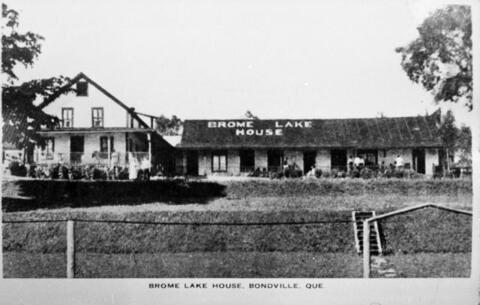
The Brome Lake House hotel attracted guests from the city who wished to enjoy its peaceful surroundings—and its celebrated social gatherings. The O’Hearn family lived on the property year-round and welcomed local groups to host dances and dinners in the hotel’s ballroom and dining rooms. These events drew visitors from across the region, enriching the area’s social tapestry.
In 1923, the iconic Brome Lake House tragically burned down. In response, the O’Hearn family moved to a nearby farm, which they transformed into a new guesthouse called the Brome Lake Lodge. They eventually renovated the barn into a dance hall, creating a vibrant community venue. In the 1940s, the family sold the property and relocated to a house in Foster. The Brome Lake Lodge later evolved into what is now Domaine Jolivent—a place steeped in its own rich story, deserving of a post all its own.
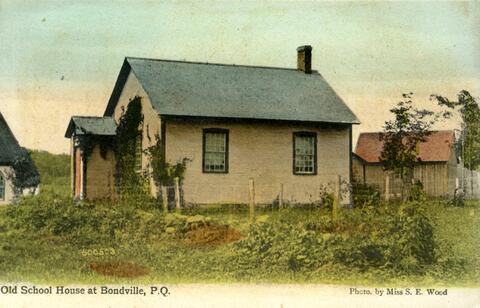
Post card depicting Bondville School, around 1910
By the mid‑20th century, the region began to be subdivided into lots for summer homes. Although tourists had been flocking to Bondville since the mid-19th century, it wasn’t until the 1960s that certain chalets were renovated for year-round use, and residential development started drawing permanent residents.

Although Bondville today is primarily residential, you can park at Carke Terrace to enjoy its designated picnic area or to launch your canoe, kayak, windsurfer, or paddleboard from the dock.


